
Sean Mars contributed additional reporting to this story.
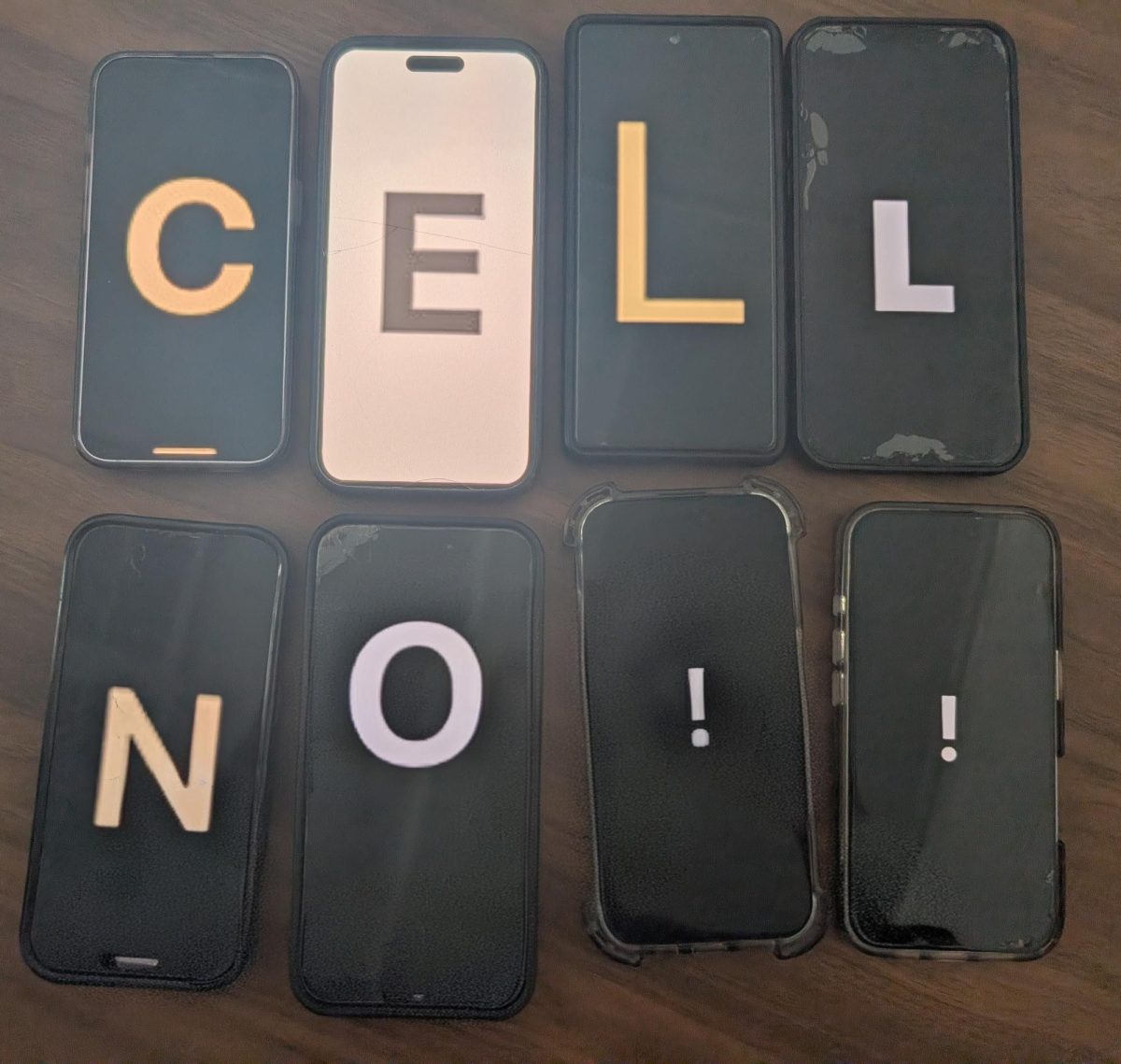
As students headed back into school on January 5th they were greeted with signs and warnings everywhere that explained the new law which enforces “no student access to personal technology during the school day, while on school property, from bell to bell”. The law does allow for some accommodations for students with written permission, but almost all high schoolers now have to suffer under this new restrictive regime. I find this new development extremely uncalled for as well as unnecessary as the previous policy was working well in most classrooms.
A main pain point with this policy is that teachers and staff now cannot allow students to use their personal devices for assignments or activities that align with the classes curriculum.
“The idea behind the law is sound, but it has problems,” said English teacher Patrick Ayers. “There should be a line in the law that allows cellphone use at teacher discretion for specific curriculum purposes. It feels like a law that was crafted with the best of intentions by people who don’t actually work in classrooms.”
Additionally, it is now difficult to punish students, especially in the hallways or the lunchroom, both places where the phone law wasn’t initially enacted. Lightridge already has a plan in place for penalizing students who disobey this policy, and the consequences will be aligned to our already in place system of Student Behavior Rights & Responsibilities.
“What’s going to occur, first time, it’s probably going to be a warning, second time, it’s going to be a warning and a phone call home,” said Hitchman, “third time, it’s going to be a referral to an administrator.”
But how are teachers expected to focus all their time catching students on their phones during free periods? Why is that their job now?
“I don’t want teachers thinking this is one more thing that they have to do,” said Hitchman, “…I don’t want our teachers having to become the cell phone police. That’s not their job. That’s not their role.”
This new policy is also negative because the original process of just having teachers trusting their classes to not go on their phones worked way better than this now much stricter policy. This new updated policy has honestly caused even more of a temptation to go on their devices because now that we have zero access to them all day. It creates more of a distraction and less focus on the actual work we should be doing.
Senior Sara Novinger said, “I think it (the new policy) makes my learning worse because when my phone is just sitting in my backpack I want to use it more”.
There are some teachers that like the “no phones” rule because they have found that it has led to less disruption and distractions in class. However, many teachers still prefer the old method of putting the phones up in the front of the classroom to having them shut off and in the bags.
“I like the policy but I don’t like how we started in the middle of the year,” said math teacher Lisa Henry. “With the (old) policy at the beginning of the year, I liked the consistency of having students turn in their phones at the beginning of class because it was easier to track and everyone was more focused”.
With so many questions and concerns flying around about these new updates, I can’t help but wonder – has the policy done more hurt than help?
It’s clear to see that this new mandated LCPS policy has further caused more issues than it has solved. However, since the Lightridge original policy of having the phones at the front of the classroom and entrusting the students to not constantly be on their phones in between bells at lunch worked so well; a good solution would be to have all of LCPS revert back that policy. This would be a perfect compromise that combines the best of both worlds and keeps everyone content. Unfortunately, as of now this new problematic law stays in place until further notice.