
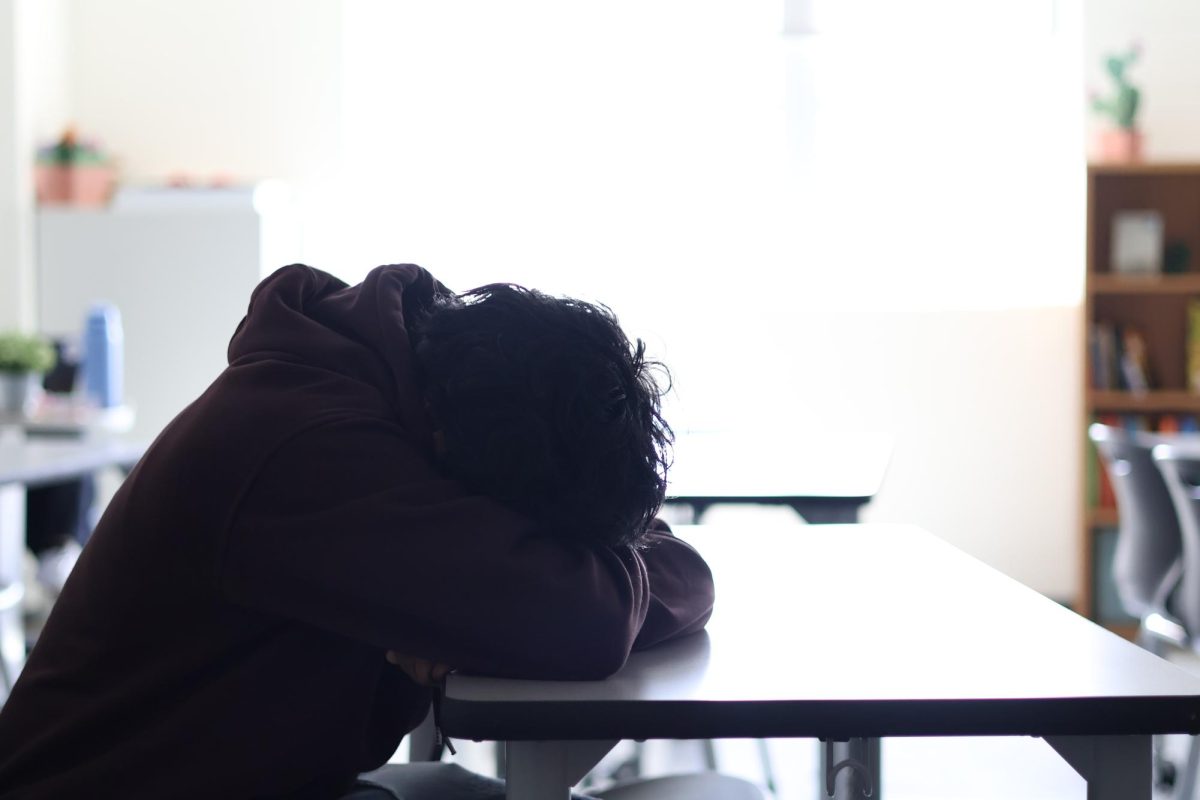
A student, exhausted by academics, extracurriculars, and personal life, stares at the tiny digital clock at the bottom corner of their Chromebook screen. It reads 1:24 in the morning, and they haven’t even begun studying for their science test. This situation is commonplace for an ever increasing number of students.
Rather than getting the recommended 8-10 hours of sleep in accordance with the National Sleep Foundation, many students, including myself, find themselves staying awake late to prioritize their academics.
I’ve seen my friends joke about substituting sleep for studying with tired eyes, and I’ve done the same in hopes of maintaining my position on the school honor roll. But the body needs sleep and will find time for it; if not consistently during the night, then in half-hour increments during classes and after school. Staying focused during school can feel near impossible when your brain needs rest.
I believe that a huge factor playing into why so many students lack sleep is due to the competitive culture among students bringing pressure to take difficult classes. As the school year approaches its end, students compare schedules for the upcoming year, boast about the multitude of Advanced Placement classes they’re taking, and list off the number of clubs they’re participating in to each other as they gulp down another energy drink to prevent themselves from sleeping through classes. It’s not impossible to take many advanced classes and do well, but many students find themselves hyperbolizing their abilities in being able to keep up with these fast-paced classes, ending up doing homework into hours of the night, every night.
Senior Adriana Lora-Patzi has experienced this and the consequences of it firsthand.
“I had to do some all-nighters or stay up really late and that would make me lose focus in class,” said Lora-Patzi. “I would be exhausted or barely paying attention at school the next day.”
Consistently not getting enough sleep leads to detrimental consequences on a teenager’s wellbeing, notably worsening academic performance for students. Lora-Patzi mentioned how last school year she felt she had to trade sleep for studying just o keep up.
“I would have to spend hours at night, up to like three in the morning maybe,” she stated, “and I would just barely get any sleep and I would be exhausted or barely paying attention at school the next day.”
Sophomore Riya Sharma, Academies of Loudoun student, believes that school is a main cause of sleep deprivation among students, due to the pressures students feel to take difficult classes. Pressure to take as many AP classes as possible, each with heavy workloads, are a large issue decreasing the amount of sleep students receive each night.
Although prioritizing her sleep, there have been times where advanced classes have prevented Sharma from doing so. She detailed her experience of having a cumulative science test, unit math test, and engineering project all due in the same week, and was simply unable to find time to sleep.
“I think teachers should be working more with each other to ensure that they’re not just stacking [work] all at the same time,” said Sharma.
Lora-Patzi stated how when she had larger workloads, her average amount of sleep would be around five hours a night. However, she has now increased that number to over eight.
“I would say I prioritize sleep now,” she said, “because not sleeping well enough would cause me not to focus in class.”
She encourages students to find time during class to get schoolwork done, and to avoid procrastination.
I find that these solutions—avoiding procrastination and teachers avoiding stacking tests—do allow for students to sleep well consistently. However, it’s not always that easy, as academics are not the only factor dictating a student’s sleep schedule. For example, clubs, sports, jobs, volunteering, and other commitments that students participate in all play into the number of hours a student can sleep each night. While a consistent eight hours of sleep does improve well being and academic performance, it’s not always practical for students to “just sleep more.”
Sharma left words of advice for students struggling to find time to sleep due to academics.
“You kind of just got to structure your life around your sleep,” she said, “and not let your sleep be structured by your life.” She also mentioned, “Try fitting in studying throughout the day and don’t try cramming it in one night. If you get your time management down, you can sleep. There’s always a way to sleep. Unless you’re a junior. Then you’re just screwed.”